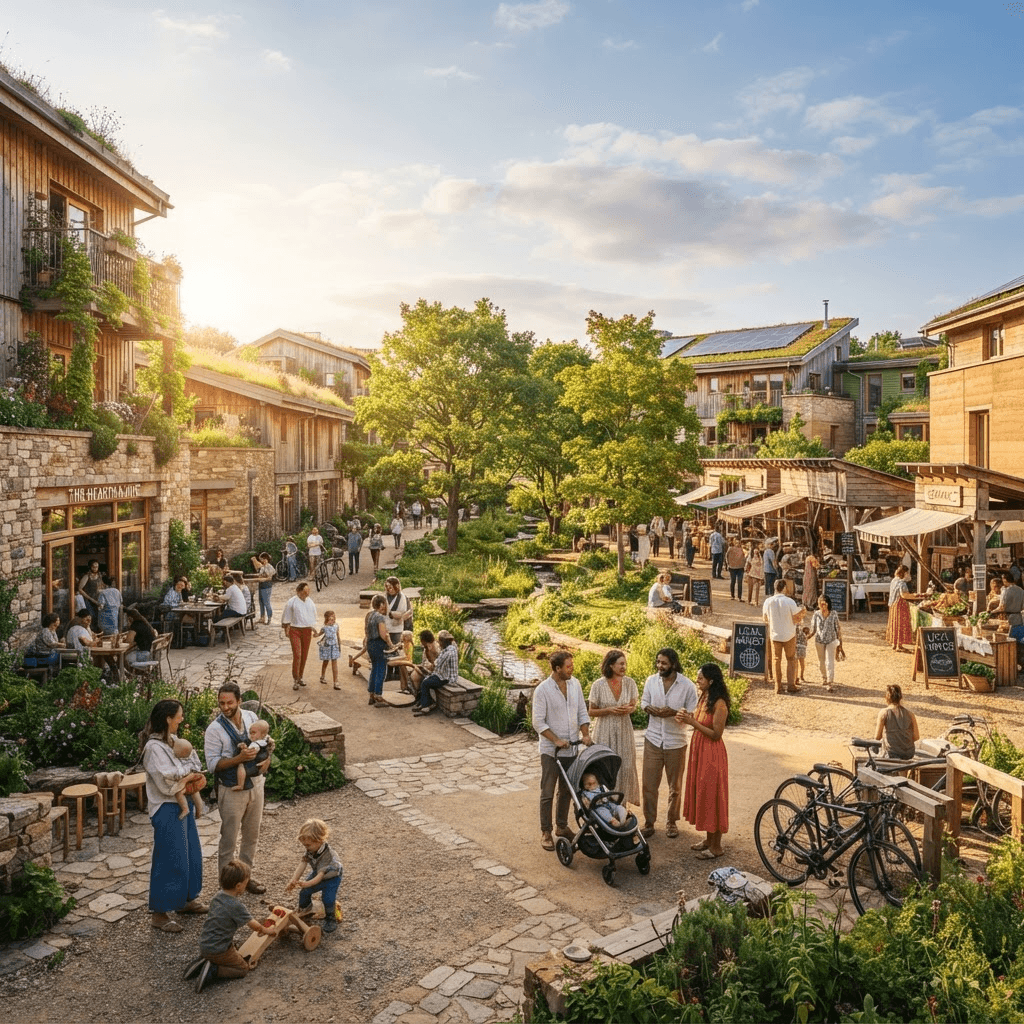
Truth
Truth is the foundation of every decision, relationship and system within Sanctum. It requires courage, clarity and the willingness to challenge comfortable assumptions.
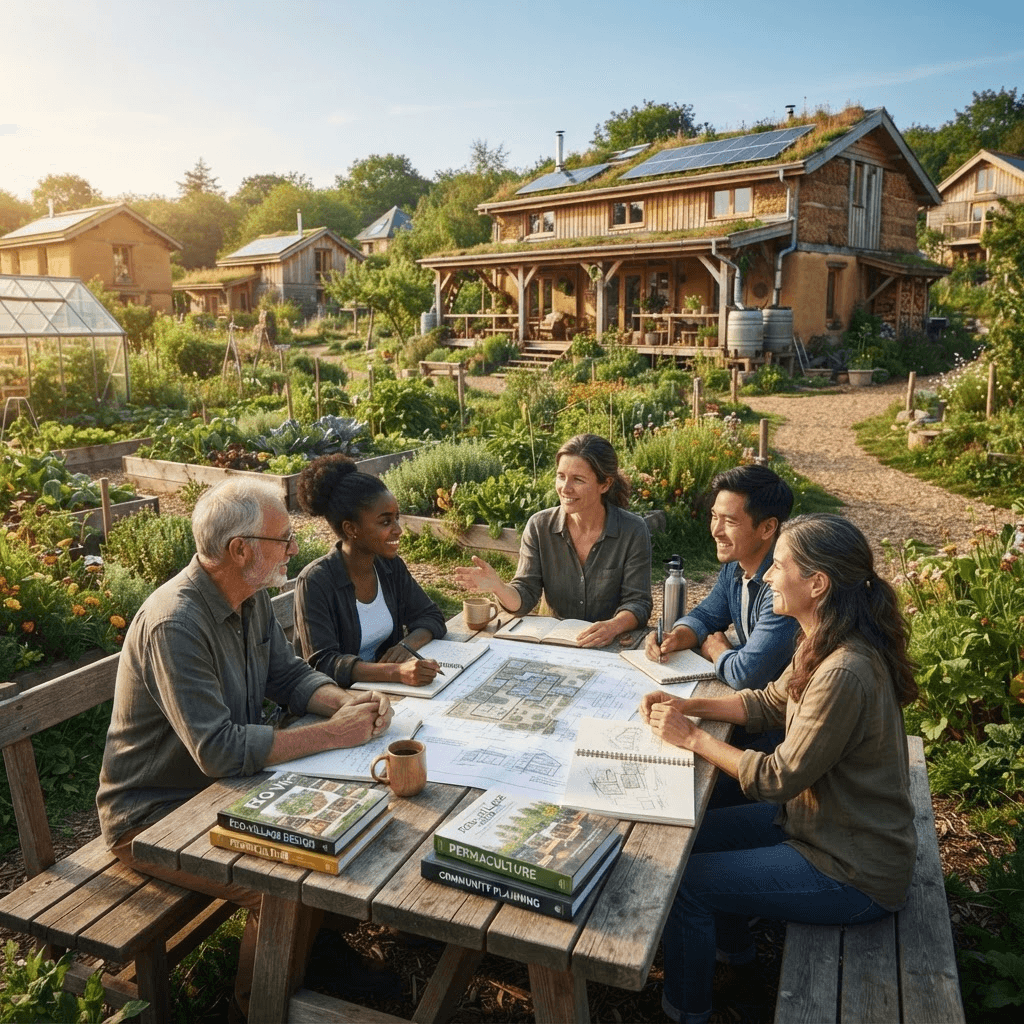
The Philosophical Foundation
Why human development comes before physical development, and what we are building towards.
The Long-Term Vision
To establish a global network of Sanctum Villages where people live with purpose, responsibility, wisdom and meaningful contribution. These villages will integrate education, health, sustainability, innovation, conscious leadership and responsible governance into a coherent and intentional way of life.
This is a long-term civilizational vision. Sanctum does not claim to have completed any village, to own land or to have established institutional partnerships. The Foundation is currently in the foundational phase of developing the intellectual, constitutional and community architecture that must precede physical development.
The Mission
To research, design, develop and support human-centred communities that promote education, stewardship, innovation, health, sustainability, responsible leadership and meaningful contribution.
The mission is not to build a building. It is to develop a replicable model of human flourishing, one that begins with the individual and expands outward into family, community, institution and civilisation.
“The village is not the mission. The human being is the mission.”
First Principles
Many well-intentioned community projects begin by purchasing land, designing buildings and drawing up financial plans. Sanctum begins differently: with the human being. Before a single structure can be built with integrity, the values, principles, governance systems and constitutional protections must be deeply developed and clearly understood.
A physical village without a sound philosophical and governance foundation is simply a collection of buildings. What makes Sanctum different is the deliberate sequencing: first the mind, the principles and the constitutional architecture; then the community; then the land and the physical form.
This is not a delay. It is the correct order. The depth of the intellectual foundation will determine whether Sanctum Villages survive and thrive across generations, or whether they become one more experiment that eventually collapses under poor governance, personality conflicts or ideological drift.
The Foundations
These four principles do not describe ideals. They describe requirements: the conditions without which genuine community life cannot endure.
Truth is the foundation of every decision, relationship and system within Sanctum. It requires courage, clarity and the willingness to challenge comfortable assumptions.
Every person is called to take ownership of thought, action, contribution and community life. Responsibility is not a burden. It is the condition of genuine freedom.
Land, resources, knowledge and human potential must be protected for future generations. We hold what we build in trust for those who come after us.
Citizenship is built through meaningful service, skill, creativity and practical support. Community life is not passive. It is built through what each person brings.
The Architecture of Community
Sanctum understands community life as a set of nested relationships, each one dependent on the health of the layer beneath it.
Everything begins with the person: their character, their self-knowledge, their responsibility, their capacity for honest contribution.
The family is the first community: the primary structure of belonging, care, intergenerational connection and character formation.
The village is the extended family: a community of shared purpose, mutual accountability, complementary skills and collective stewardship.
Every decision made in Sanctum must be evaluated against its impact on those who are not yet born. Stewardship is an intergenerational obligation.